How to Find Freelance Clients: 9 Channels That Work
 By Suraj Rao8 min read
What You'll Learn
- The fastest clients come from people who already know your work: past clients, your network and referrals. Start there before you spend money or time on anything else.
- Agencies, targeted cold outreach and niche communities fill the gap in the short term; content and search build a pipeline that keeps working for years.
- Treat it as a pipeline: a short list of targets, a weekly outreach habit, and a record of where each paying client came from so you double down on what works.

The fastest way to find freelance clients is to start with people who already trust you: tell past clients and colleagues you have availability, ask happy clients for introductions, and offer overflow help to agencies in your field. Then add one or two channels that keep leads coming, such as targeted cold outreach, a niche community, a marketplace profile or content that people find through search. Track where every paying client came from, and put more time into the channels that produce them.
Most advice lists fifty places to look. That's the problem: spreading thin across all of them produces very little. Below are nine channels, how fast and costly each is, templates for the first messages and a 30-day plan. If you're just starting out, our first-month freelancing checklist covers the setup to do first.
The nine channels at a glance
| Channel | Time to first client | Cost | Best for |
|---|---|---|---|
| 1. Past clients | Days | Free | Anyone with a few past clients |
| 2. Your network | Days to weeks | Free | Anyone, especially career switchers |
| 3. Referrals | Weeks | Free, or a referral fee | Freelancers with happy clients |
| 4. Agencies and other freelancers | Weeks | Free | Designers, developers, writers |
| 5. Targeted cold outreach | Weeks | Time | A clear niche and offer |
| 6. LinkedIn | Weeks to months | Time | B2B services |
| 7. Niche communities | Months | Time | Specialists |
| 8. Marketplaces | Days to weeks | Platform fees | New freelancers building a track record |
| 9. Content and search | Months to years | Time | Long-term pipeline |
1. Past clients
A client who's already paid you once is the easiest one to win again. They know your work, they've been through procurement and they don't need convincing.
Every quarter, email past clients you liked working with:
Subject: Quick hello, and some availability in [month]
Hi [Name],
It's been a while since we worked on [project]. I hope [result or launch] is still going well.
I have some availability from [date] and thought of you. If [specific thing they mentioned, such as phase two or a new product] is coming up, I'd be glad to help.
Either way, good to be in touch.
Make it specific to them. A generic "I'm available!" to everyone you know works far less well than three thoughtful notes. Ending projects well makes this easier: our client offboarding checklist includes the follow-up that keeps the door open.
2. Your network
Former colleagues, managers, classmates and friends in related industries are the next ring out. Many first clients are an old employer or someone from a previous job.
Tell people clearly what you do and who it's for. "I'm freelancing now" is forgettable. "I build Shopify stores for food and drink brands that have outgrown their theme" is something people can pass on.
3. Referrals
Referrals turn every good project into a lead source. They rarely happen on their own; you have to ask.
- Ask at the high point, right after a successful launch or a thank-you message, not when you send the final invoice.
- Be specific: "Do you know anyone at another [type of company] who's dealing with [problem]?"
- Make it easy: offer a two-line description they can forward.
- Thank them whether or not it turns into work. Some freelancers offer a referral fee or a discount on future work.
4. Agencies and other freelancers
Agencies have busy periods and need reliable people to call. Freelancers in neighbouring fields (a designer and a developer, a copywriter and an SEO consultant) pass work to each other.
Find five to ten agencies whose work you respect and who serve clients you'd like to serve. Send a short note to the founder or head of delivery with two relevant examples and your rates. Agency work often pays less per hour than direct clients, but it's steady and you skip the sales. Our guide to charging different rates for different clients covers how to price it, and hiring your first subcontractor shows the relationship from the other side.
5. Targeted cold outreach
Cold outreach works when it's narrow and personal: 20 well-researched messages a week beat 500 templates.
- Pick a niche where you can name a common problem. "SaaS companies whose pricing pages haven't changed in two years" is a niche. "Businesses" isn't.
- Build a short list of 50 companies that fit.
- Find a reason to write to each: a new hire, a launch, a page that's broken or out of date.
- Write short: one observation, one idea, one easy question.
Subject: Your pricing page on mobile
Hi [Name],
I noticed the plan comparison table on [company]'s pricing page gets cut off on phones, so the Pro plan's features aren't visible without scrolling sideways.
I redesign pricing pages for SaaS companies. For [similar client], fixing this kind of layout came before [result, if you have one you can share].
Would a two-minute screen recording of what I'd change be useful?
Follow up once or twice, a week apart, then stop. Follow the anti-spam rules where you and the recipient are: in the US, the FTC's CAN-SPAM compliance guide covers commercial email, and rules in the UK and EU differ.
6. LinkedIn
For B2B services, LinkedIn is where buyers are. Three things matter more than posting daily:
- A clear headline: who you help and with what, not just your job title.
- A featured section with two or three case studies or results.
- Consistent, useful posts about the problems your clients have. One or two a week is enough to stay visible to your network.
Comment thoughtfully on posts from people you'd like to work with. A useful comment is often a better first contact than a connection request.
7. Niche communities
Slack groups, forums, Discord servers and industry associations where your clients gather. Join two or three, not twenty. Answer questions generously for a few months before mentioning your services. Specialists do best here, because "the person who knows about X" is easy to remember.
8. Marketplaces
Upwork, Fiverr, Contra, Toptal and specialist platforms give you access to buyers who are actively hiring, which helps when you have no network or track record. The trade-offs are fees, price competition and rules about taking clients off the platform. Bonsai keeps a long list of freelance job sites if you want options.
Use marketplaces to build reviews and a portfolio, then gradually build direct relationships. Our guide to moving a client off Upwork or Fiverr covers the rules and fees, and our Upwork time tracker alternative post covers proving your hours once you work directly.
9. Content and search
Writing about the problems your clients search for brings in leads for years, but slowly. It works best when you write for a specific audience: "how to migrate a WooCommerce store to Shopify without losing SEO" beats "10 web design tips".
Case studies are the most useful content most freelancers can publish: the client's problem, what you did and the result, with numbers if they agree. They help on every other channel too, because you can link to them in outreach and proposals.
A 30-day plan
If you need clients soon, don't spread across all nine. Do this:
| Week | Actions |
|---|---|
| 1 | Write your one-line positioning. Email 10 past clients and 20 people in your network individually. |
| 2 | Contact 5 agencies or freelancers in neighbouring fields. Update your LinkedIn headline and featured section. |
| 3 | Build a list of 50 target companies. Send 20 personal outreach messages. |
| 4 | Follow up on everything. Ask your happiest client for a referral. Write one case study. |
Then keep a weekly habit: a few hours of outreach every week, including weeks when you're busy. Most freelancers' income dips come from stopping sales when work is good. Our freelance cash flow guide covers how to survive the gaps while the pipeline fills.
Qualify before you propose
More leads aren't useful if half of them are poor fits. Before you write a proposal, have a short call and ask about budget, timeline and who decides; our list of discovery call questions covers what to ask, and client red flags covers what to watch for. A clear, fixed offer also makes leads easier to convert: see productized services.
Track where clients come from
The channel that feels busiest isn't always the one that pays. For each client, note how they found you and what they've paid in total. After six months, you'll know which channels to keep and which to drop. Our post on which clients actually make you money shows how to measure the other half: what each client earns you per hour once you count all the time you spend.
How Tristiks Grow helps
- Prospects and clients in one place, so a lead's notes, files and proposal are on their profile before they sign.
- Proposals sent as links, with a note when they're viewed and online signing.
- Time and invoices by client, so you can see which clients, and which channels, bring in the most for your hours.
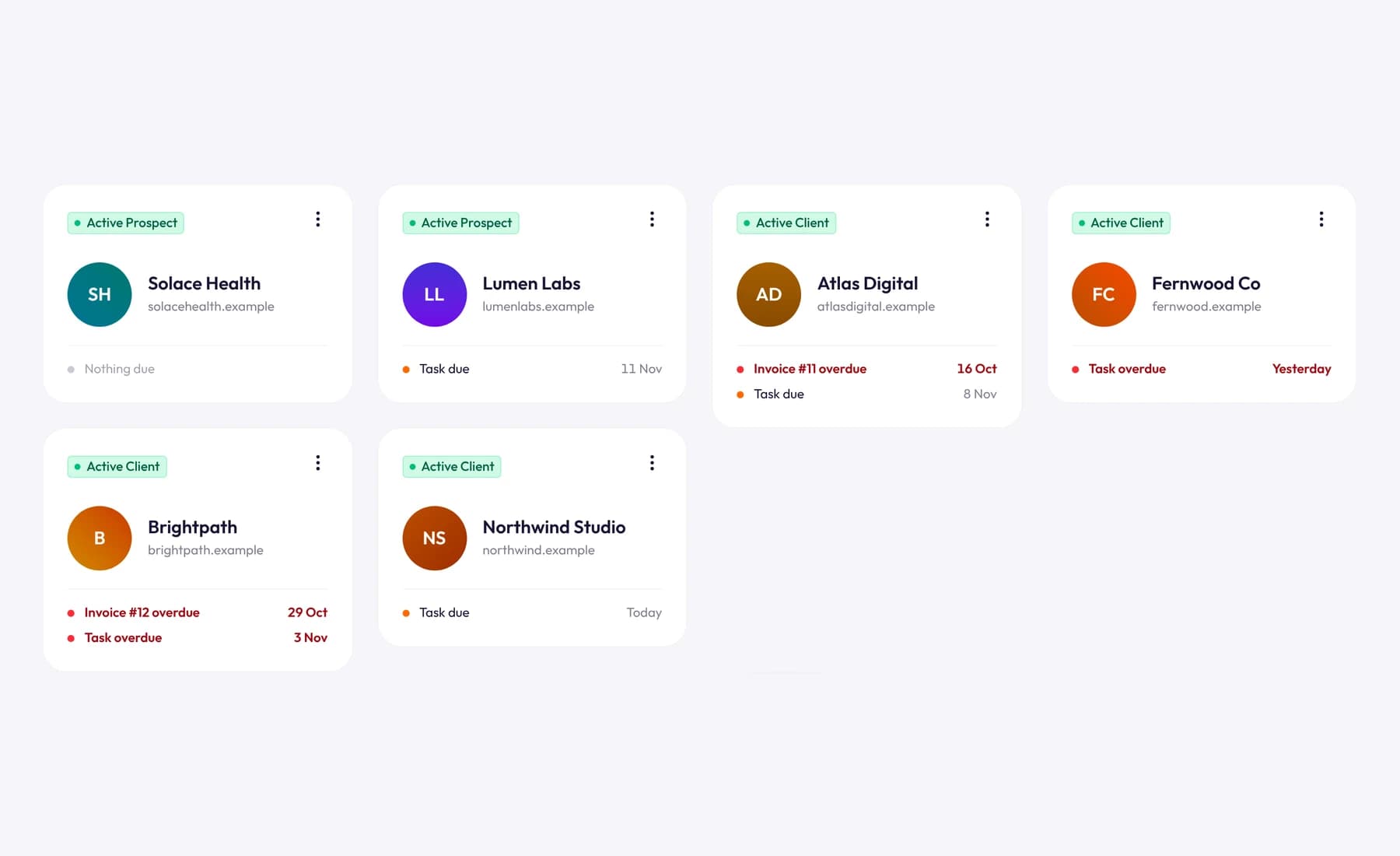
See client management software for more.
Frequently asked questions
What's the fastest way to get a freelance client?
Contact past clients and former colleagues individually and tell them specifically what you do and when you're available. It's not glamorous, but it's usually days, not months.
Do I need a website to find clients?
Not to start. A clear LinkedIn profile and two or three case studies (even as PDFs) are enough for outreach and referrals. A website matters more once you're investing in content and search.
How many outreach messages should I send?
Quality matters more than volume. Twenty researched, personal messages a week is a sustainable habit that most freelancers can keep alongside client work.
Should I lower my rates to win my first clients?
Discounting is risky because clients anchor on the first price. If you need a track record, offer a smaller, fixed-scope project at your normal rate instead. Our hourly rate guide shows how to set the rate in the first place.
Wrap up
Freelance clients come mostly from people who already know your work, then from a few channels you work consistently. Start with past clients, your network and referrals, add agencies and targeted outreach for the short term and content for the long term, and track which channels actually pay.
When the leads come in, keep prospects, proposals and invoices together with Tristiks Grow, free for 14 days.
Category: Freelancing
Suraj Rao
Suraj Rao is the founder of Tristiks, the team behind Tristiks Grow and its desktop time tracker OneTrack. He writes about time tracking, client work and getting paid, and about DevOps, cloud and AI from years of building software.